Last updated: October 21, 2026
Quick Answer: Crypto Basics and Wallet Safety is about 3 core choices and 1 rule—protect the keys, verify every transfer, and pick the custody model you can actually manage. This guide explains what a wallet actually does, how transactions work, and how to avoid the mistakes that cause most losses in Crypto Basics and Wallet Safety.
Key Takeaways
- A crypto wallet does not “store coins” the way a bank account stores money; it manages the keys that prove control.
- The seed phrase is the most sensitive recovery tool. Anyone who gets it can often take the wallet.
- Self-custody gives control, but it also shifts recovery, backup, and scam defense onto the user.
- Exchange accounts are easier to use, but the platform controls the keys and the account can be frozen or hacked.
- Wallet safety is mostly about process: verified downloads, strong device security, cautious transaction checks, and offline backups.
- If a user cannot keep backups private and recover them reliably, self-custody may be the wrong choice.
What a crypto wallet actually does
A crypto wallet controls access to blockchain funds; it does not hold the coins in the same way a leather wallet holds cash. The wallet stores or helps generate cryptographic keys, and those keys authorize transactions on a blockchain such as Bitcoin or Ethereum. That distinction matters because losing the key can mean losing access even if the coins still exist on-chain.
Most wallets present a friendly interface: an app, browser extension, hardware device, or exchange dashboard. Under the hood, the wallet manages at least one public address and one private key, often derived from a seed phrase. The public address is safe to share for receiving funds. The private key, and the seed phrase that can recreate it, must stay secret.
This is where newcomers get into trouble. They treat a wallet like a login and expect a password reset, but most wallets do not work that way. A wallet made from a 12-word or 24-word recovery phrase can usually be restored on another compatible wallet, but only if that phrase is correct and kept private. If the phrase is copied into a notes app, emailed, photographed, or pasted into a chat, it becomes much easier to steal.
The right mental model is this: the wallet is a keyring, not a vault. The blockchain is the vault. Control of the keyring controls the vault. That makes wallet choice and wallet hygiene part of money management, not just software setup.
For readers who want a standards-based reference, the NIST Digital Identity Guidelines are useful background on authentication concepts, and the Federal Trade Commission has plain-language guidance on crypto scams and payment fraud. Those sources do not tell someone which token to buy; they do help explain why account access and identity protection matter.
Seed phrase, private key, and address: what each one means
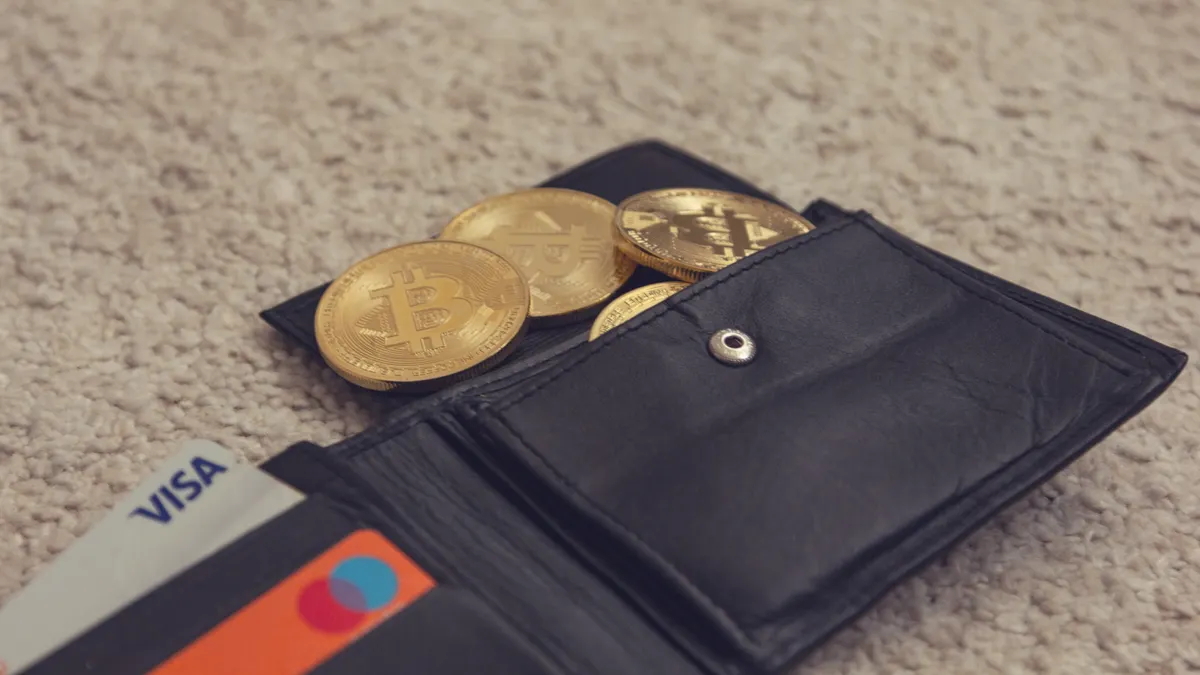
The seed phrase is the recovery master key, the private key is the signing secret, and the address is the receiving destination. Confusing those three can lead to expensive mistakes.
A public address can be shared. It is the string people send funds to. A private key should never be shared. It is what signs a transaction and proves the spender has authority over the funds. The seed phrase is usually a human-readable backup for recreating the private keys generated by the wallet. Many wallets use a 12-word or 24-word phrase based on the BIP-39 standard, though not every wallet or chain follows exactly the same recovery design.
The practical rule is straightforward:
- Share the address.
- Protect the private key.
- Guard the seed phrase as if it were the master password, PIN, and spare key to the same safe.
Where people slip is not in understanding the words, but in forgetting the consequences. If a scammer gets the seed phrase, they may not need the device at all. If a phone is lost but the seed phrase is secure, access can often be restored, depending on the wallet setup and the user’s recovery method; if that happens, consult a professional or the wallet provider’s official support before acting. If both the device and the phrase are exposed, the funds may be gone quickly.
There is another subtle risk: wallet compatibility. A seed phrase is not always interchangeable across every wallet app, especially when one app uses extra derivation settings or supports only certain chains. That is why a generic “write it down somewhere” approach is not enough. A proper backup needs the words in the correct order, plus enough context to know which wallet standard or network the phrase belongs to.
The best habit is to treat the seed phrase like an unchangeable, high-stakes recovery document. It belongs offline, private, and readable years later. If it cannot be recovered accurately, it is not a backup.
Exchange account or self-custody wallet: which one fits your situation?
A centralized exchange account wins for beginners who need convenience and can accept platform control; a self-custody wallet wins for users who want direct control and can manage backup discipline. That is the real split, and it matters more than brand names.
An exchange account is the simpler starting point. The account setup usually feels familiar: email, password, and two-factor authentication. The exchange holds the assets on the user’s behalf. That means password resets, account recovery workflows, and customer support are part of the package. It also means the platform can impose withdrawal delays, compliance checks, or regional restrictions. If the platform gets hacked or freezes an account during a security review, the user may not have immediate control.
Self-custody means the user controls the private keys. That removes platform dependency, which is the main advantage. It also removes the safety net. There is no help desk for a lost seed phrase. There is no reversal if a transfer goes to the wrong address. There is no friendly “undo” button when the user signs a malicious transaction. Self-custody is powerful, but it is unforgiving.
Here is the comparison that actually changes the choice:
| Criteria | Exchange account | Self-custody wallet | Winner for this condition |
|---|---|---|---|
| Key control | Platform controls keys | User controls keys | Self-custody for control |
| Recovery support | Often available | Usually none | Exchange for support |
| Ease of use | Familiar account flow | More setup and vigilance | Exchange for first-time users |
| Scam resistance | Better if the platform flags risk | Depends on user judgment | Exchange for cautious beginners |
| Withdrawal flexibility | Can be delayed or limited | User initiates directly | Self-custody for direct access |
| Backup responsibility | Mostly platform-side | Entirely on the user | Exchange if backups are a concern |
| Error reversibility | Some disputes and freezes possible | Transfers are usually final | Exchange when reversals matter |
| Device compromise risk | Account login can be targeted | Private key can be exposed | Depends on security habits |
| Cross-chain or app use | Limited by platform support | Broader app compatibility | Self-custody for advanced use |
The mistake is thinking one option is “better” in the abstract. It is better only for the conditions the user faces. Someone who cannot protect a seed phrase should not rush into self-custody. Someone who needs direct control over funds or wants to use on-chain apps may find an exchange account too restrictive.
This is also where a sober warning belongs: self-custody is not “safer” in the absolute sense. It is safer only against certain platform risks, while increasing personal responsibility in exchange.
How wallet safety works in practice
Wallet safety comes from layered habits, not one magic tool. A hardware wallet, a strong password, and a seed phrase written on paper still fail if the user installs a fake app or approves the wrong transaction.
Start with the device itself. A phone or computer used for crypto should be updated regularly, protected by a long passcode or password, and not shared casually with other people. Download wallet apps only from the official developer source or a clearly verified app store listing. Fake wallet apps are a known scam pattern, and the first version of safety is simply not installing the wrong software.
The next layer is transaction hygiene. Before approving any transfer, confirm the destination address, the network, and the asset type. Sending on the wrong chain is a common error because many assets exist on multiple networks with similar-looking addresses. A checksum address can help catch typos, but it will not save someone from sending to the wrong chain or the wrong smart contract.
Then comes phishing defense. A wallet seed phrase should never be entered into a website, browser pop-up, email, or support chat. Legitimate support teams do not need a seed phrase. Any request for it is a red flag. That rule sounds basic, yet social engineering still works because the scammer creates urgency, authority, or fear.
Hardware wallets add another protection layer by keeping private keys off the internet-connected device. They are not a cure-all; if the user confirms a malicious transaction on the hardware screen, the wallet will sign it, and if that happens, consult a professional or the wallet provider’s official guidance. Still, hardware wallets reduce exposure to malware and remote theft in a way that software-only hot wallets cannot.
The most useful attitude is to assume every transaction can be mistaken, every link can be forged, and every backup can be stolen if it is stored casually. That sounds harsh because the environment is harsh. Crypto transfers are often final, and the margin for error is smaller than in a credit card dispute.
For a reader who wants a neutral standards reference, the Coinbase security help pages and the Ledger Academy materials explain basic wallet hygiene clearly, and the National Institute of Standards and Technology remains a strong source for authentication principles. None of those sources can remove the need for caution.
Which wallet type fits the way you actually use crypto?
A hot wallet fits active users, while a hardware wallet fits users who value stronger key isolation and can accept extra setup. The right pick depends on how often the funds move and how much damage a mistake would cause.
A hot wallet is connected to the internet, usually as a mobile app or browser extension. It is fast, flexible, and convenient for frequent transfers, decentralized apps, and smaller balances. That convenience is the selling point and the weakness. Because the wallet stays online, malware, browser compromise, or a bad extension can have more opportunities to interfere.
A hardware wallet keeps the private key on a separate device and signs transactions without exposing the key to the computer or phone. That separation is the major strength. It makes remote theft harder and creates a stronger barrier between daily browsing and signing authority. The trade-off is friction: more steps, more setup, and more responsibility for recovery phrases and device updates.
A simple way to think about the choice is this:
- Use a hot wallet when speed matters, the balance is limited, and the user understands the risk of an always-connected device.
- Use a hardware wallet when the funds are harder to replace, the user can handle a slower workflow, and the goal is stronger isolation from online threats.
The hardware wallet is not “best” because it is fancy. It is best when the consequence of compromise is high enough to justify the extra steps. A person moving funds daily may find it annoying. A person storing a meaningful balance and not transacting often may find the inconvenience worth it.
One more practical point: wallets differ by supported chains, interfaces, and recovery methods. The model name matters because compatibility matters. A wallet that works smoothly with one ecosystem may be awkward in another. Buyers should check official support lists rather than assuming all wallets handle all assets the same way.
The mistakes that cost people money
The biggest losses usually come from a short list of preventable errors, not from obscure technical failures. That is the part generic guides often miss.
The first mistake is sharing the seed phrase with anyone. No support agent, influencer, exchange rep, friend, or “recovery service” should ever need it. If a user gives away the phrase, the wallet can often be drained immediately.
The second mistake is sending funds to the wrong network or wrong address. Crypto transfers are not like bank transfers with broad correction options. A token sent on the wrong chain may be difficult or impossible to recover. A typo in an address can send funds to an address no one controls or one controlled by an attacker.
The third mistake is trusting fake support channels. Scammers copy exchange logos, build lookalike websites, and run ads that mimic real help pages. If someone says there is a wallet problem and asks for the seed phrase, the conversation is already over.
The fourth mistake is poor backup discipline. A backup that exists only in one phone note, one cloud folder, or one screenshot is not really a backup. It is a single point of failure. A proper backup needs privacy, durability, and retrieval that still works after a phone loss, house move, or device upgrade.
The fifth mistake is assuming a wallet app update is harmless. Updates are usually normal, but the user should still verify the source and avoid downloading files from random links or direct messages. The wallet ecosystem is full of urgency scams that depend on people acting before they think.
A good rule is to slow down at the exact moment money leaves the wallet. If a transfer feels rushed, that is the moment to stop and verify. The blockchain does not provide a rewind button, and that changes the standard for care.
When does the decision flip?
The verdict flips when the user cannot reliably protect backups, needs frequent customer support, or must accept platform controls for legal or operational reasons. Those are the scenarios where the “best” wallet model changes.
First, if the user is new and easily stressed by recovery phrases, an exchange account or a custodial setup may be the better starting point. That is not because custody is ideal; it is because the user may do less harm with a simpler interface while learning. A seed phrase under pressure can become a liability.
Second, if the user expects high-frequency trading, repeated transfers, or rapid access to many assets, a hot wallet may fit better than a hardware wallet. The extra signing steps in cold storage can become a bottleneck. In that case, convenience can outweigh stronger isolation for the operational use case, though the security trade-off remains.
Third, if the user must satisfy compliance rules, inheritance planning, or organizational controls, the simplest consumer wallet may not be enough. Institutional or multi-signature setups may be more appropriate. That is a different problem from personal storage, and pretending one wallet fits every governance need is a mistake.
Fourth, if the amount involved is small and replaceable, the user may not need the overhead of advanced storage. The key phrase is “replaceable.” A small balance can still matter to someone, but the operational burden should match the stakes.
What does not flip the decision is hype. A token’s popularity, an influencer’s claim, or a slick interface does not change the underlying custody trade-off. The core question remains the same: who controls the keys, and can that person protect them well enough for the amount at stake?
The verdict: what to choose first
Choose an exchange account if the user is starting out, wants familiar recovery support, and is not ready to manage a seed phrase alone. Choose a self-custody wallet if the user can protect backups, accepts responsibility for mistakes, and wants direct control over the keys. Neither if the user cannot keep recovery information private and retrievable, because wallet loss in that case is more likely than wallet safety.
That verdict does not mean every beginner must stay on an exchange forever. It means the first choice should match the user’s real habits, not a slogan about freedom. A careful transition from custodial storage to self-custody makes more sense than jumping straight into a system the user cannot safely maintain.
A wallet is only as safe as the person operating it, the device it lives on, and the backup plan behind it. Crypto is not hard because the math is mysterious. It is hard because finality raises the cost of ordinary mistakes. That is why the safest approach is not the flashiest one; it is the one the user can follow correctly every time.
Drafted with AI; not yet reviewed by a person.