
Last updated: October 27, 2026
Key Takeaways
- Spot trading is buying or selling the asset itself, usually settling on the exchange ledger right away or soon after.
- Leverage lets you control more size than cash alone, while margin is the collateral that keeps the position open.
- Beginners should learn market, limit, stop-loss, and take-profit orders first.
- The safest first trade is tiny, and spot is the better default unless margin is fully understood.
Crypto Trading for Beginners: Spot, Leverage, and Risk Basics is the act of buying and selling cryptocurrencies with the aim of profiting from price moves, and the first thing a beginner needs to understand is the difference between spot trading and leverage trading. This guide explains both, shows how margin changes the risk, and walks through the order types and position-sizing basics that keep a small mistake from becoming an oversized loss. It is general information, not financial advice; for your own situation, speak with a qualified financial adviser and consult a professional before trading, especially if you are unsure how to read a price chart or compare market and limit orders. For platform and product terminology, see the CFTC’s investor resources on derivatives and margin trading at https://www.cftc.gov/LearnAndProtect.
Who this is for, and who should pause first
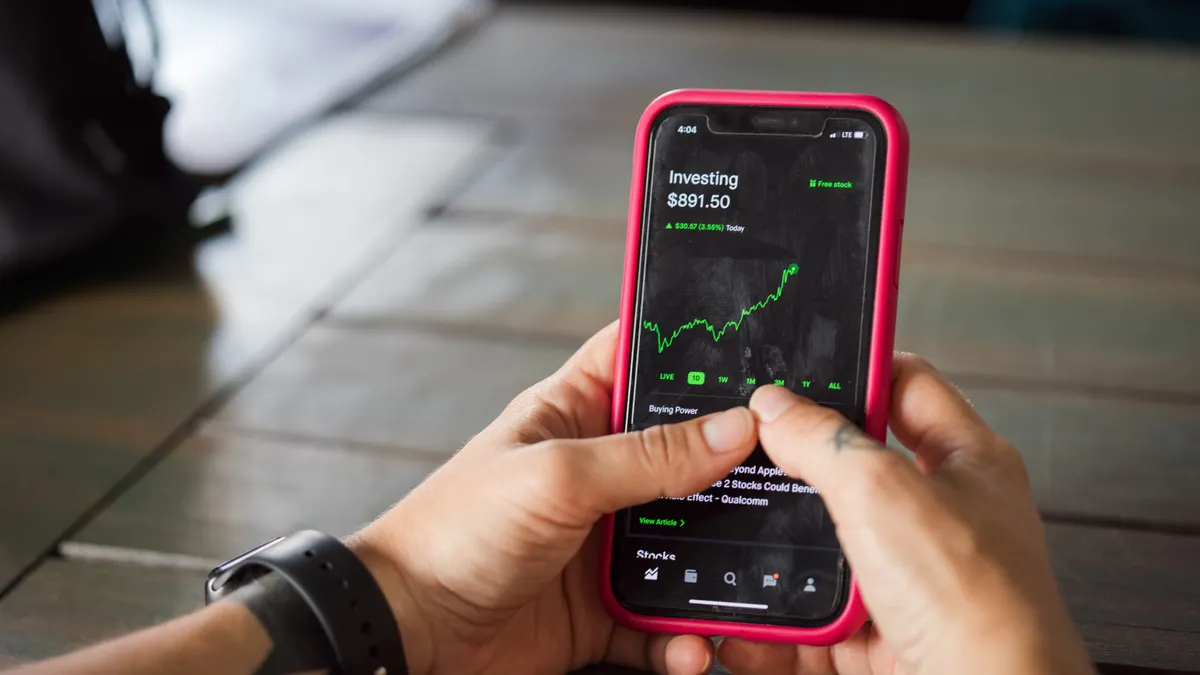
This is for a beginner who knows what Bitcoin or Ether is, has a funded exchange account or is preparing one, and wants to understand how crypto trading works before placing a first order. Specifically, it assumes the reader can already read a price chart, knows the difference between market and limit orders in broad terms, and is willing to treat the first few trades as practice rather than income. It also assumes the reader has the patience to read a 1-hour candlestick chart without trying to predict the next five minutes.
This is not for someone who needs money quickly, cannot afford a total loss on the funds set aside for trading, or wants a shortcut around learning market mechanics. It is also not the right place to start if local rules around margin trading, derivatives, or exchange access are unclear; those rules differ by country and platform, and they change. A reputable exchange and a separate storage plan are part of the setup, which is why a crypto exchange hub belongs upstream of this page, not inside it. For regulatory context, the U.S. Securities and Exchange Commission’s investor page and the FCA’s cryptoasset warnings are useful starting points: https://www.investor.gov and https://www.fca.org.uk/consumers/cryptoassets.
The most useful mindset is simple: crypto trading is not a promise of profit, and it is not a casino if approached carefully, but leverage can turn it into one very fast. Spot trading is the cleaner starting point because it keeps the trade tied to assets you actually own. Leverage adds borrowing, liquidation risk, and a much smaller margin for error. If that last sentence already sounds uncomfortable, that reaction is useful information.
For context, a plain-vanilla spot market trade can be understood without special math; leverage requires understanding margin, maintenance requirements, and the possibility of forced closure. That difference matters more than any chart pattern. The rest of this guide is built around that gap.
What spot trading in crypto actually means
Spot trading means you buy or sell the asset itself at the current market price, with settlement usually immediate or near-immediate on the exchange ledger. If you buy 0.01 BTC in the spot market, you now own 0.01 BTC; if price falls, you have an unrealized loss, but there is no loan attached to the position. That is the basic model most beginners should learn first.
The mechanics are straightforward. A spot order may be a market order, which is generally intended to execute quickly at the best available price, or a limit order, which only executes at your chosen price or better. The difference matters in fast markets, because a market order fills quickly but may slip to a worse price, while a limit order protects your entry price but may not fill at all. On a volatile day, a 0.5% move can happen before the order book settles; on some thinner altcoins, the gap can be much wider.
Spot trading has a clear advantage: the maximum theoretical loss on the position itself is the amount you paid for it. That does not make it low risk, because the asset can still fall sharply, but it removes the borrowed-money problem. The downside is equally clear. If the market moves against you, there is no built-in mechanism that makes the loss stop at a convenient level. You need a plan for exiting, not a fantasy that the price will “come back.”
Beginners often misunderstand spot trading as “safer” in a moral sense. It is not safe in that sense; it is simply simpler. Simpler means fewer moving parts: no funding rate, no liquidation threshold, no borrowed principal. That simplicity is why spot is the better classroom for learning how fees, spreads, volatility, and order execution interact. For a definition of spot market structure, see the SEC’s investor resources and the CME Group education pages on market basics.
How leverage and margin change the trade
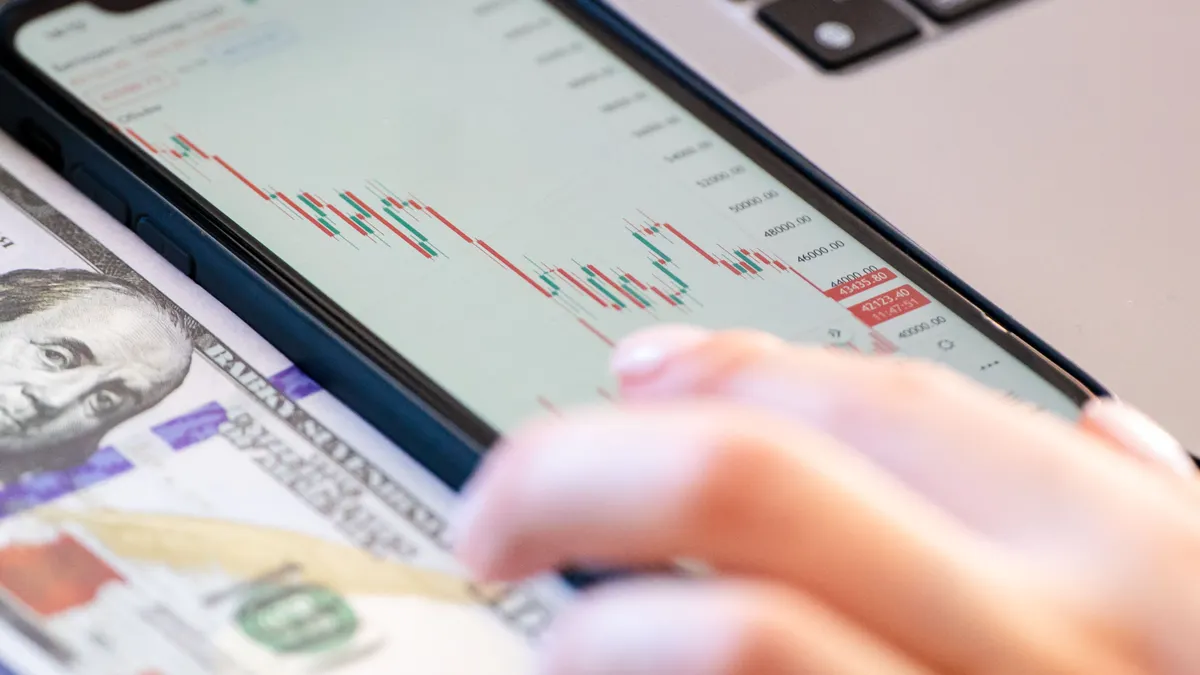
Leverage means controlling a position larger than your cash balance by using borrowed funds or an instrument that simulates borrowing, and margin is the collateral required to hold that position. If you open a leveraged trade with 5x exposure, a relatively small price move against you can erase your posted margin much faster than in spot trading. That is the core risk, and it is easy to underestimate until the position is live.
The math is not complicated, but it is unforgiving. A 2% adverse move in an unleveraged spot trade is a 2% loss on the position value. In a 5x leveraged position, the same move can translate into a much larger hit to your margin, depending on fees, maintenance requirements, and the contract structure. Different exchanges define margin rules differently, so the liquidation price on one platform will not match another even when the headline leverage ratio looks identical.
A margin account typically has at least two thresholds: initial margin, which is the amount needed to open the position, and maintenance margin, which is the minimum that must remain to keep it open. If equity falls below maintenance, the platform may issue a margin call or liquidate the position automatically. In crypto, liquidation can happen fast because prices trade 24/7 and can jump through levels without a pause.
That is why leverage is not just “more risk”; it changes the type of risk. Spot risk is price risk. Leveraged trading adds counterparty rules, liquidation risk, gap risk, and sometimes funding costs if the position is held in a perpetual futures market. If the reader cannot explain those terms in plain language, leverage is too early. A careful beginner should learn the spot market first and only consider leverage after the order types and position sizing rules are familiar.
For a deeper framework, the spot-versus-derivatives distinction is standard market structure, not a crypto-only invention. The same logic appears in margin trading across asset classes, and regulators such as the U.S. Commodity Futures Trading Commission explain derivatives risk in plain terms on their investor pages. The CME Group also explains margin mechanics in its education material.
Which order types should beginners learn first?
The first order types a beginner should learn are market order, limit order, stop-loss order, and take-profit order. Those four cover entry, planned exit, and automatic risk control, which is enough to avoid most beginner mistakes without drowning in product names. Everything else is secondary until those four are instinctive.
A market order tells the exchange to execute as quickly as possible at the best available price, although the final fill can differ in a fast or thin market. It is useful when speed matters more than precision, but it can fill at an unexpected price in a fast or thin market. A limit order tells the exchange the worst price you are willing to accept for a buy, or the minimum price for a sell. It protects price, not certainty of execution.
A stop-loss order is an order that becomes active when price reaches a trigger level and is usually used to cap losses. In simple terms, it is the prewritten exit if the trade moves the wrong way. A take-profit order does the opposite: it locks in an exit if price reaches a chosen target. In practice, both are used to remove emotion from the decision.
A beginner habit that often helps is to decide the exit before placing the entry. That means choosing the trade size, the stop level, and the take-profit level before any click. A common framework is to place the stop where the original trade idea is clearly wrong, not where the loss feels emotionally tolerable. If the stop is placed too close, normal volatility can knock you out of the trade; if it is placed too far away, the loss can become too large for the account.
On a liquid major pair, a limit order may be appropriate for entry, then a stop-loss below a clearly defined support area, and a take-profit at a predefined resistance area. The exact levels depend on the chart and the timeframe, but the discipline does not change: define entry, define exit, define the maximum acceptable loss, then place the order. A beginner who cannot do that should not touch leverage yet. For examples of order handling and market mechanics, the CME Group and CFTC education pages are useful references.
A practical process for a first trade
A first trade should be sized so small that a mistake is survivable, and it should use spot unless the reader fully understands margin. The goal is not to prove skill in one trade; it is to prove that the order workflow, fee structure, and risk controls make sense before anything larger is attempted.
- Choose one liquid trading pair: use a major pair such as BTC/USDT or ETH/USDT on a regulated or reputable venue where the order book is active. Verify that spreads are narrow and that the pair trades continuously. A wide spread or thin book means slippage risk is higher.
- Decide the trade type: use spot for the first exercise, not leverage. Verify that the platform clearly labels the order as spot and not margin, futures, or perpetuals. If borrowed funds or a liquidation price appear, you are not in spot.
- Select the entry order: use a limit order if price discipline matters more than speed, or a market order only if immediate fill matters more. Verify the expected fill price and the estimated fee before confirming. A large gap between expected and final price is a warning sign.
- Set the stop-loss: place it at a level that invalidates the trade idea, not just a random round number. Verify that the stop distance is not so tight that a normal 1% to 2% swing would hit it immediately on a volatile asset. A stop placed inside normal noise is a bad stop.
- Set the take-profit: choose a target that matches the chart structure and your plan. Verify the reward is not trivially small compared with the stop distance. If the potential gain is only marginally larger than the likely fee and spread, the trade is weak.
- Calculate position size: decide the cash amount first, then calculate the quantity. Verify that the maximum loss at the stop is a small, predefined slice of the account, not a gut feeling. If the size feels exciting, it is probably too large.
- Check the total cost: include maker/taker fees, spread, and any funding or borrowing cost if the product is not pure spot. Verify that these costs do not overwhelm the expected move. High fees can turn a good-looking chart into a poor trade.
- Place the orders and record the plan: enter the trade, the stop, and the target, then write down the reason for the trade and the exit levels. Verify the order is live and the quantities are correct to the decimal places the exchange uses. A wrong decimal or wrong side of the market is a serious operational error.
A worked example can stay simple. If the account is small, a 0.01 BTC spot trade is still a real position, but the size should be chosen so the stop-loss does not create an emotionally or financially damaging loss. The exact number depends on the account size, the asset’s volatility, and the local fee schedule. A beginner who cannot explain why the stop sits where it does should not place the order.
For technical reading, the CME Group’s educational material on futures and margin is useful because it makes the mechanics of leverage plain even though the products differ from spot crypto. The logic of collateral, maintenance, and forced exit carries over.
When should a beginner stop and get help?
A beginner should stop when the trade depends on borrowed money, unclear rules, or money that cannot be lost without damaging rent, debt payments, or basic living costs. Those are the situations where the problem is no longer market education; it is personal finance risk, and a qualified adviser is the right next step.
You cannot explain the liquidation price in plain language: you are in leveraged territory without understanding the fail point — use spot only, or get help before trading margin.
The platform terms mention maintenance margin, funding rates, or forced liquidation: the trade can close automatically — pause until you understand exactly how the product behaves.
The position size would make a 5% move stressful: the trade is too large for the account — reduce size or step back entirely.
The money came from credit, emergency savings, or funds needed within 12 months: the cost of a bad trade is too high — do not use it for trading.
The market is so thin that a modest order moves the price: execution risk is high — avoid the pair until liquidity improves.
Your plan needs you to “watch it closely” instead of using a stop-loss: the trade is relying on attention, not risk control — set orders or do not enter.
Those are not moral judgments. They are signs that the standard beginner process no longer fits. Crypto trading gets harder, not easier, when a trade size is too large or the structure is too complex. The correct response is usually to step back to spot, lower the size, or seek qualified financial guidance.
The mistakes beginners make, and what they cost
The most expensive beginner error is confusing a profitable chart idea with a manageable trade. A correct view on direction does not rescue a position sized too large, entered badly, or left without an exit. The market is full of correct opinions that still lose money.
- Using leverage first. The consequence is magnified losses and a liquidation event that happens before the trader understands what went wrong. The correct alternative is spot trading until the order workflow feels routine.
- Placing no stop-loss. The consequence is an open-ended loss that can grow during a sharp move or overnight gap. The correct alternative is to define the invalidation point before entry and place the stop immediately.
- Sizing by emotion instead of risk. The consequence is that a normal pullback becomes psychologically unbearable. The correct alternative is to size from a predefined loss limit, not from how much profit sounds attractive.
- Confusing market order speed with good execution. The consequence is slippage, especially in fast or thin markets. The correct alternative is to use a limit order when price control matters more than instant fill.
- Ignoring fees and spread. The consequence is that small trades lose to transaction costs before the thesis has room to work. The correct alternative is to include costs in the entry plan and ignore setups
Drafted with AI; not yet reviewed by a person.